¶ Supplemental Notes on Breadboard Selection
¶ I. Criteria for Breadboard Selection
This kit adopts a combination of two 400-tie-point breadboards instead of a single 830-tie-point breadboard. For projects based on the ESP32 development board, this configuration offers significant advantages in usability, layout flexibility, and expansion capability.
¶ (1) Why the 830-Tie-Point Breadboard Is Not Recommended
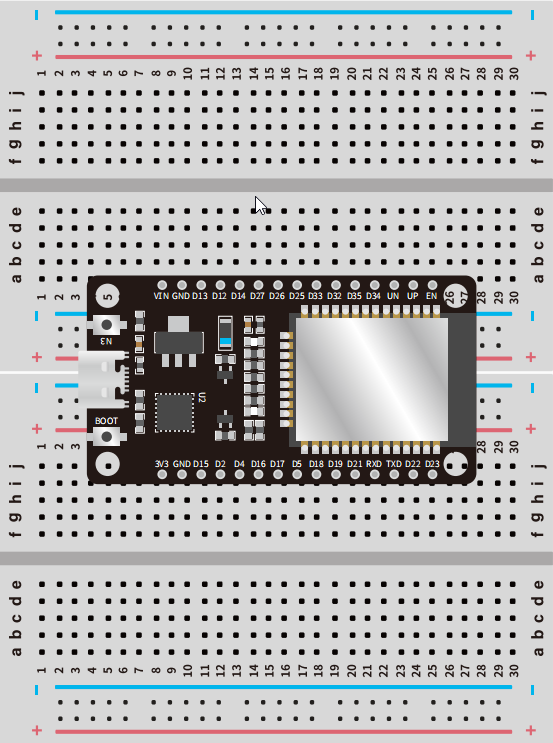
Due to its structural layout, the 830-tie-point breadboard presents limitations when used with an ESP32 development board.
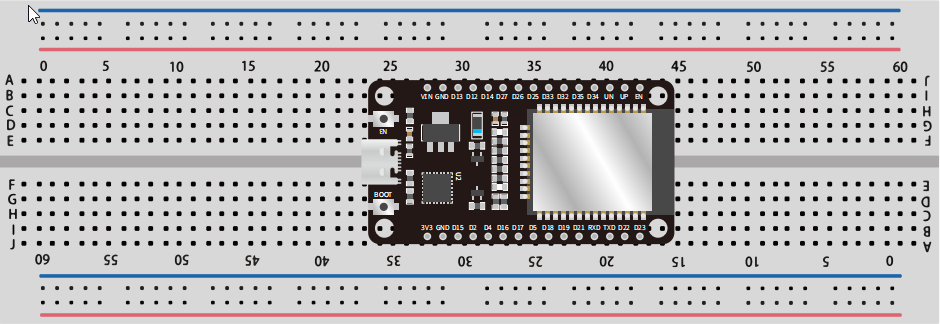
When the ESP32 is mounted vertically, its physical length occupies one side of the breadboard’s I/O connection area. As a result, certain ESP32 GPIO pins become inaccessible, preventing normal wiring and causing a direct loss of corresponding functions. This limits hardware expansion and reduces practical usability.
¶ II. Method of Combining Breadboards
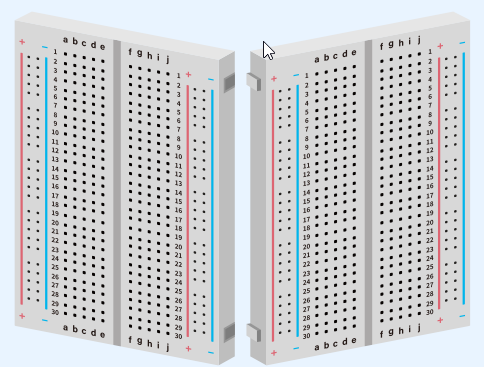
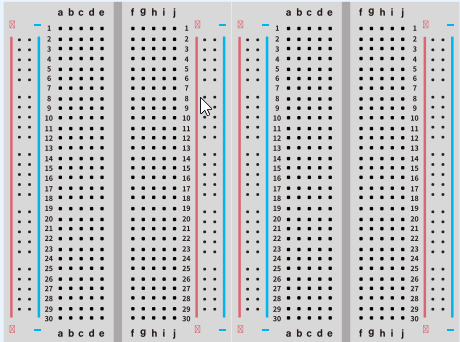
Breadboards include a built-in tongue-and-groove interlocking design, allowing simple and secure assembly:
- Align the connection edges:
Position the tongue side of one breadboard against the groove side of the other.
¶ Ⅲ.Assembly of Breadboard and ESP32 Mainboard
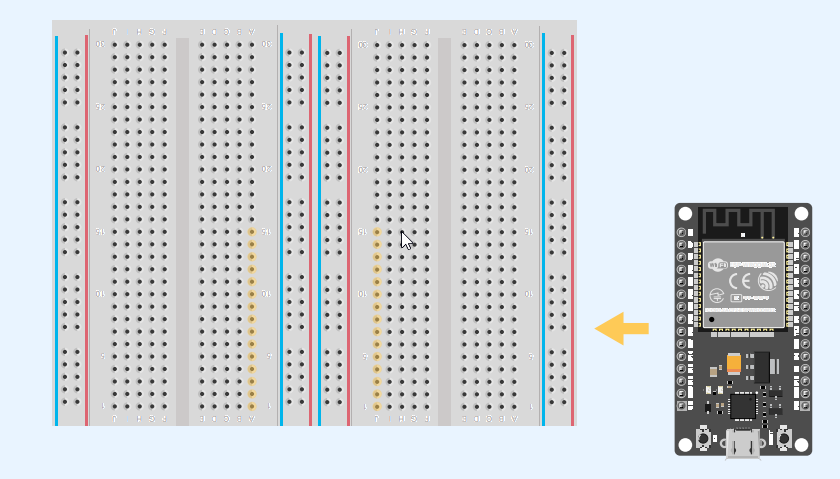
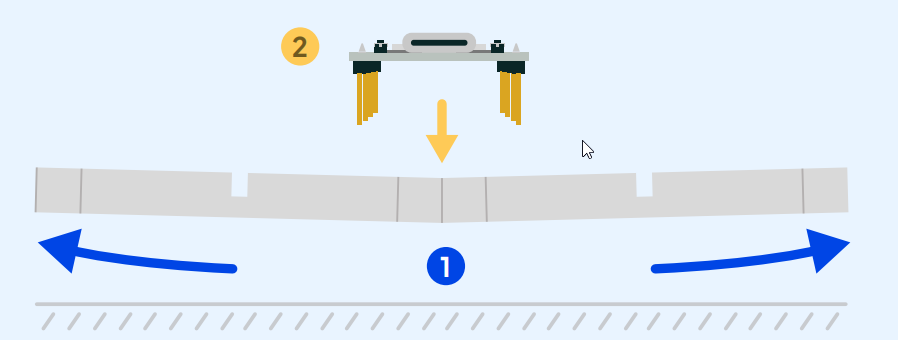
Adjustment method (refer to the diagram):
Slightly shift the breadboard, or gently bend the middle joint of the breadboard, so that the pins of the ESP32 mainboard align perfectly with the breadboard holes before inserting it smoothly.
¶ Ⅳ .Using a 9V Battery and Power Adapter Board
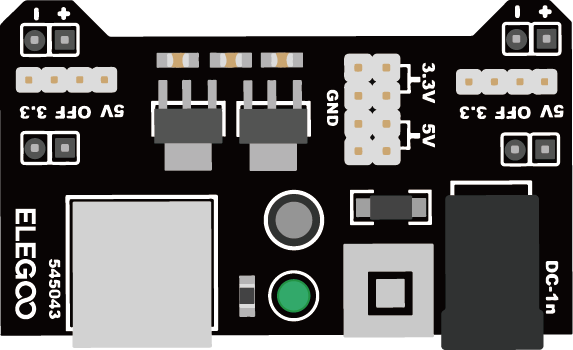
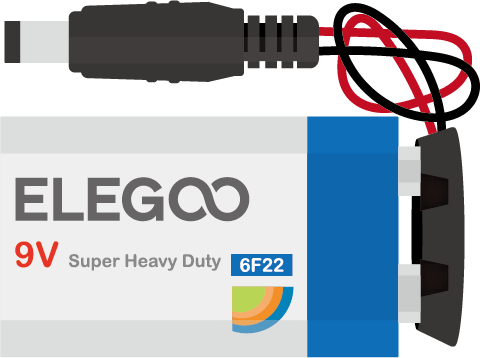
When powering the ESP32 with an external supply, you must use a 9V battery together with a dedicated power adapter board.
Follow these steps:
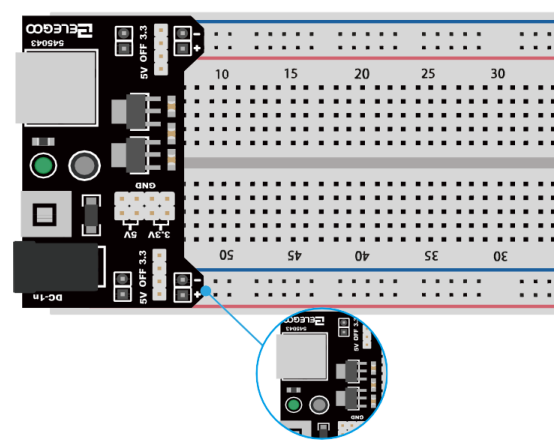
First, connect the power adapter board to the breadboard. Strictly observe the polarity of the connections, and ensure the adapter board is mounted entirely on a single breadboard section—do not install it across two separate breadboard halves.